What’s with all the Secrecy?
The secrecy surrounding Freemasonry is one of the oldest and most misunderstood traditions in our craft. Far from being sinister, it serves a very practical and principled purpose, protecting certain knowledge, experiences, and fraternal bonds making them meaningful for those who have earned the right to wear the badge of a Mason.
A Masonic Lodge keeps private the grips by which we recognize one another, the meanings of various symbols from our lectures, and the personal discussions between members while in lodge. These things are not secret because they are dangerous. They are reserved because their value depends on the proper context, preparation, and mutual trust by which they are communicated. Revealing them casually would dilute the experience for those who later join and would break the confidence our members place in one another through our obligations.
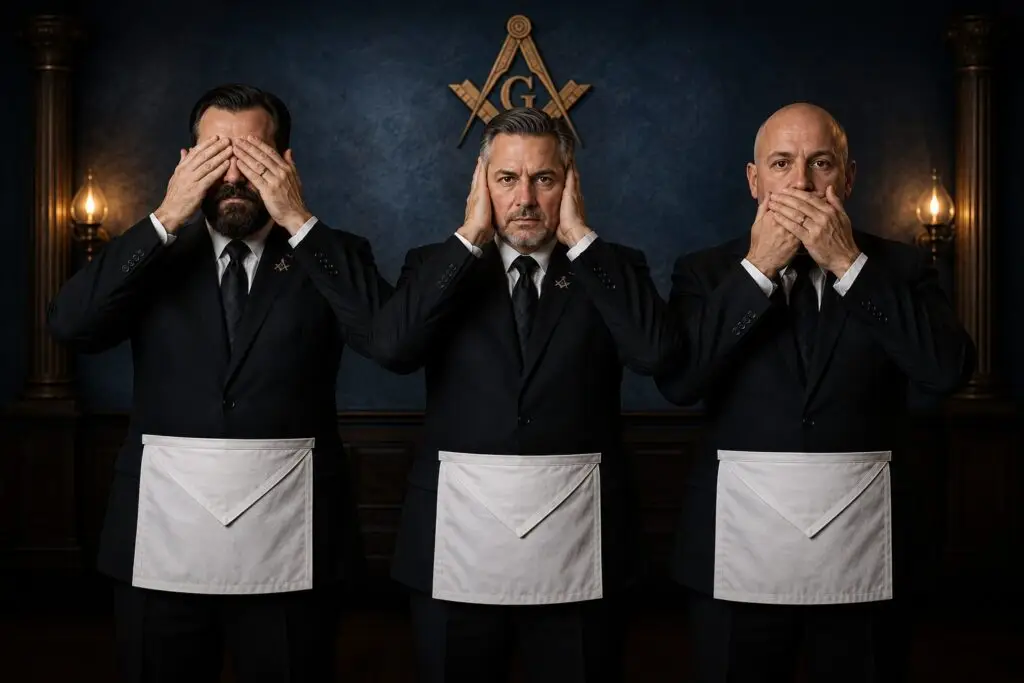
This principle is not unique to Freemasonry. Society depends on carefully guarded information in many areas of life. Consider for example, doctors protecting patient privacy so individuals feel safe sharing sensitive medical details. Without that confidentiality, people might avoid care or withhold facts that could save their lives. Others might use that information in harmful ways against them. Lawyers uphold attorney-client privilege for the same reason. Honest communication is essential to justice, and it only happens when clients know their words will not be used against them in a fair trial, legal negotiations between parties in dispute or engaged in lawful contracts, or those seeking advice on future activities.
Businesses also protect trade secrets for good reason. The formula for Coca-Cola or the secret recipe for the Kentucky Fried Chicken brand (who’s founder was a Brother) are not secretive out of vanity, but because public disclosure would harm the competitive advantage built over generations of work and investment. Inventors guard prototypes and processes until patents are secured or products are ready. Governments classify certain information as Top Secret to protect national security, intelligence sources, and ongoing operations of our brave operators; knowledge that, if widely released, could cause irreparable harm.
In each case, secrecy is not secrecy for its own sake. It is a boundary that ensures information reaches only those who have demonstrated the need, the trustworthiness, or the right to receive it. Doctors and lawyers earn that right through professional duty and licensing. A business partner or employee earns access through contracts and loyalty. A government clearance is granted only after rigorous vetting and a demonstration of the need to know such information.
Freemasonry operates on a similar foundation. You may be surprised to learn that there are mandatory secrets between Masons such as our vote on various elections or decisions, confidences given to and received by us from another brother, and other sensitive information communicated during various meetings or processes. More importantly, membership and advancement requires a voluntary commitment to a challenging process designed to develop moral standards, build trust, and earn the title of Master Mason. This process can take many months of hard, persistent work. It’s not easy and many fail to achieve this honor. The private aspects of lodge life are reserved for those who have demonstrated a certain level of trust. This decision is not solely intended to exclude those outside our walls as much as it is to preserve the integrity of the fraternity and the privacy of the men who belong to it.
In an age where constant sharing of personal information and a pervasive digital exposure of values, the deliberate choice to keep some things confidential remains both necessary, and frankly, healthy. Whether in medicine, law, commerce, government, or a Masonic lodge; protecting certain knowledge for those who have earned it promotes a stewardship of timeless, necessary, and healthy practices.