Brother Philip S. Miller
A man has three commodities to offer the world: his time, his treasure,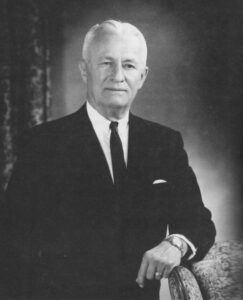 and his talent. Masons distinguish themselves through how they use these gifts, guided by mastery of the 24-inch gauge and a deep devotion to brotherly love expressed through charity. Charity forms the very foundation of Freemasonry. A life built on those stones becomes one of great usefulness and beauty to the Great Architect and the community it serves.
Brother Philip Simon Miller Jr. of Douglas Lodge No. 153 in Castle Rock, Colorado, embodied this ideal through a remarkable journey of self-determination, hard work, and quiet generosity. Born into a modest, hard-working family of butchers in Illinois, Philip faced early hardship. His mother suffered from tuberculosis, prompting the family to move to Denver in hopes the dry climate would help. After her passing in 1908, they sought new opportunities. By 1916, 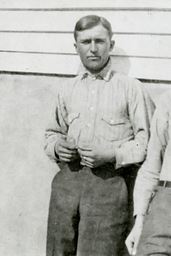 they relocated to the small town of Elizabeth, Colorado, east of Castle Rock. Business grew rapidly as they supplied meat to the war effort. The Millers soon operated a cattle and hog ranch alongside three butcher shops. From a young age, Philip volunteered in the community, helping build the first Chamber of Commerce pavilion and donating quality meats to support Red Cross fundraisers.
Economic challenges after World War I hit hard. When a local bank denied a much-needed loan, Philip made a pivotal decision. He moved his family to Castle Rock, the county seat with strong growth potential, and poured all his efforts into building a future there. He and his wife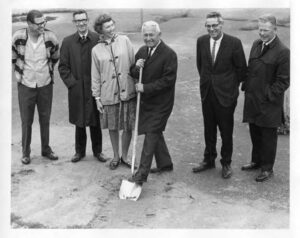 Jerry settled into the Cantril House and opened the Castle Rock Meat Market just steps from what is now the lodge building. Jerry worked side by side with him in every venture, providing unwavering strength and support. Philip continued his public service, quickly earning the respect of town leaders. He was appointed to the board of trustees and helped bring electricity to the town. In November 1923, he petitioned Douglas Lodge No. 153 for the degrees of Masonry. He was raised a Master Mason on March 29, 1924, and served the lodge faithfully as Tiler and Senior Steward while expanding his businesses. His path from butcher to banker highlights the power of determination and hard work. The Great Crash of 1929 devastated the local economy. When the First National Bank of Castle Rock struggled and ultimately failed, local businessmen turned to Philip and others to establish a new bank. In 1938, the Bank of Douglas County opened its doors, with Philip at the helm.
 Unlike many institutions, this bank focused on supporting small farmers, ranchers, and local businessmen. Philip often extended loans with minimal collateral and kept interest rates low, believing in helping others as he wished he had been helped years earlier. He treated every customer squarely and on the level. Remarkably, the Bank of Douglas County never posted a loss and became one of Colorado’s most successful banks. By 1980, the town had grown from roughly twenty-five businesses to nearly six hundred, most financed through his bank.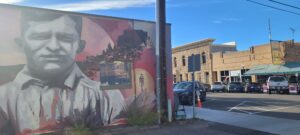
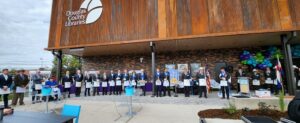
Philip became a wealthy man, yet he lived a simple life marked by generous, quiet charity. He supported the ranching community through 4-H programs and risky loans when others refused. When the police needed space, he donated a building. In 1968, he and Jerry funded the county’s first official public library and had the Grand Lodge lay the cornerstone. In 1979, facing a severe water shortage, he donated valuable water rights from his ranch—over 300 acre-feet, nearly one hundred million gallons—to the town at no cost. He could have sold them for millions but chose
to give instead.
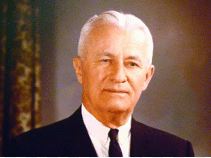 Philip and Jerry never sought luxury. Even as deca-millionaires, their final home was the first with modern appliances like an electric dishwasher. Jerry passed away just before their 68th wedding anniversary. Philip laid down his working tools in 1995 after 71 years as a Mason. He left behind a bank with over $100 million in assets and established a perpetual charitable fund of more than $30 million. To this day, it supports Shriners Hospital for Children, Children’s Hospital, the Douglas County Library, scholarship programs, 4-H, and other vital local causes. Brother Philip’s legacy is not measured merely in buildings or wealth, but in the vibrant community his charity
 helped create. His life demonstrates the transformative power of self-determination, relentless hard work, and Masonic charity. May every good man and Mason strive to give more than has been given to him, building lives of service that endure beyond our time.
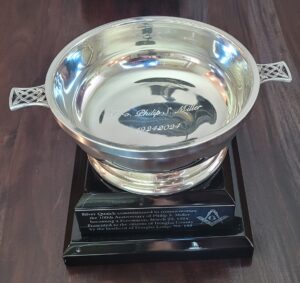
In commemoration of the one-hundredth anniversary of his Raising, the brethren of Douglas Lodge No. 153 gifted a ceremonial Scottish Quaich to the citizens of Douglas County. The quaich is an ancient symbol of friendship, peace, and fidelity. The Miller Clan occupied the same Scottish Lowlands as that of the Douglas (and Adair) Clans. 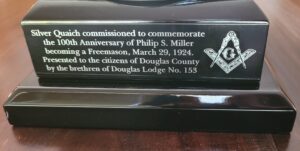 It is displayed in the lobby of the Philip S. Miller Administration building on Third Street in Castle Rock.