
We take the responsibility of supporting the families of our fallen Brothers very seriously. Read more below and contact us if we can help.
Dear Douglas Widow,
The Brethren are saddened we both find ourselves here, grieving the loss of a wonderful man and Mason. We can’t imagine the hurt you may be experiencing. We lost a Brother but, you lost a husband, partner, and best friend.
We want you to know that you are not alone. We took an obligation to your husband and part of that responsibility extends to you. We have created this page to help connect you with trusted resources you may need in the coming days, weeks, and months. Grieving takes time and everyone grieves in their own way, and in their own time. We want you to reach out to us if you need help or comfort during this difficult time.
The duty to relieve the distressed rests at the foundation of Freemasonry. Our duty to attend to the necessities of our brethren’s widows and orphans is part of a fundamental obligation we take. Historically, Freemasonry has established orphanages, homes for widows, and benevolent societies across the globe. The obligation is not limited to financial assistance but extends to visitation, counsel, and protections from hardship, to ensure that our widow’s and orphans never suffer friendless or destitute lives. These beliefs are a fundamental expression of the Masonic tenant of Relief. This page was designed to provide various resources for all widows and orphans, whatever lodge their husband was affiliated with.
If additional resources are needed for a Douglas widow or orphan, please contact the Lodge Secretary by using the email on the right or submit our contact form here.
Unfortunately, tragedy is often accompanied by predators trying to scam you and other loves ones during a difficult time. Please refer to these resources to avoid any scams.
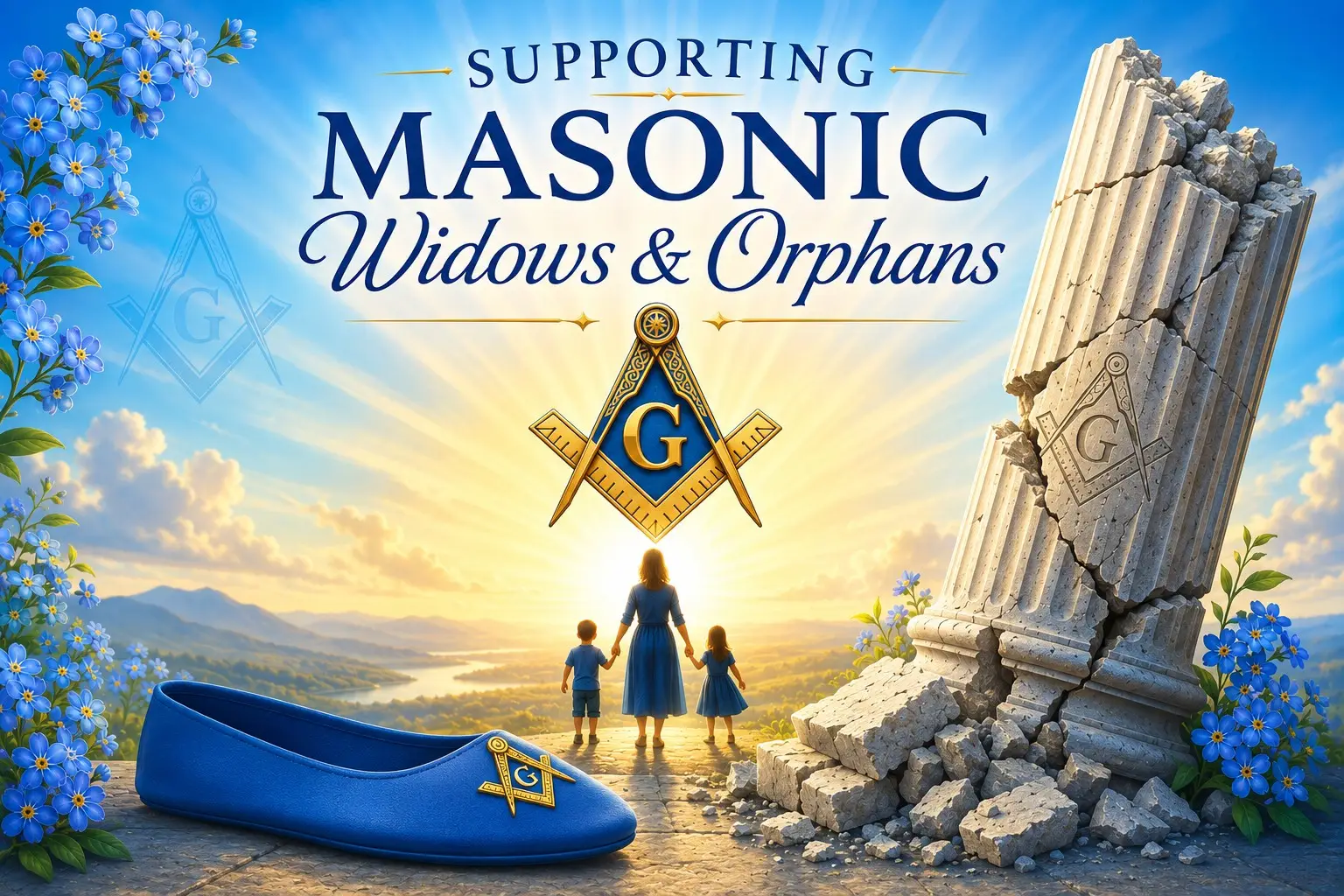
Have you ever noticed a Masonic lady or perhaps a widow wearing a blue slipper pin? A woman wearing this symbol is under the protection of all Masons. Here’s the story…The symbolism comes from the Bible, specifically the Book of Ruth. In the story, a man named Elimelech took his wife Naomi and their two sons out of Bethlehem to the land of Moab. Then, after the two sons were married, Elimelech and both of Naomi’s sons died. Naomi returned to Bethlehem with her widowed daughter-in-law Ruth. They were able to stay with a relative of Elimelech’s named Boaz, who had a farm outside of town. Boaz fell in love with Ruth, but due to the laws at the time, this was a little bit complicated. Boaz set up court at the city gate (as was the custom) and asked the closest kinsman of Elimelech to settle all of his accounts (in essence, settle the debts of his death). When the kinsman could not take care of everything in the estate, Boaz stepped forward and said he would take care of the entire estate. As was the custom, the kinsman removed his shoe and offered it to Boaz to seal the deal. Boaz accepted the shoe and held it up for the crowd to symbolize that the deal had been made. Boaz was then able to take Ruth as his wife, and their son Obed became the father of Jesse and the grandfather of King David. The shoe is the symbol of a promise, and the Masonic blue color is a symbol of perfection. The blue of the sky does not fade and is everlasting. The Masonic Blue Slipper represents that this woman is the relative of a Mason, and is thereby under the protection of all Masons and the unfading oath of all Masons to protect widows and orphans.
In Freemasonry, the broken column represents a life cut short, the unfinished work of a Brother whose support of the Craft has
ended, echoing the legend of Hiram Abiff and the ancient idea of a fallen “pillar of the Craft.” For Masonic widows, this symbol takes on a deeply personal meaning. Many lodges present a Broken Column pin or brooch as an emblem of continued honor and care. It assures the widow that she is not forgotten, that the fraternity remembers her late husband’s labors, and that Brothers stand ready to offer friendship, assistance, and support in times of need. Worn with pride, the broken pillar becomes a quiet reminder of lasting bonds: though one column is broken, the strength of the Craft endures around her.
In times of grief, the delicate blue forget-me-not whispers a gentle promise: I will not forget you. Its name and meaning stem from a medieval German legend. A knight, reaching for the flowers along a riverbank for his beloved, fell into the current under the weight of his armor. As he sank, he threw the blooms to her and cried, “Vergiss mein nicht” (forget me not).
This tale cemented the flower’s role as a symbol of faithful remembrance. In the late 14th century, England’s future King Henry IV adopted it as his badge during exile, inscribed with “Remember me.” Victorians later wove it into mourning jewelry and the language of flowers, representing undying love and memory beyond death. In Douglas Lodge the Forget-Me-Not flower is a part of our remembrance ceremony to comfort the bereaved, offering a quiet affirmation that love and memory endure and fulfill our duty to rescue from forgetfullness those unreckoned acts of love and charity.
All Masons in good standing (at the time of their death) are entitled to a Masonic funeral. Regardless of time elapsed, if you need assistance in arranging a service or have questions about it, please contact the lodge Secretary for information and arrangements.